Which AI Humanizers Actually Bypass AI Detectors?
We ran the same AI-generated essay through 10 different AI-text humanizers and checked the output against the detectors people actually use. Here's the honest results.
Tested against: Turnitin, GPTZero, Originality.ai, and Quillbot AI Detector
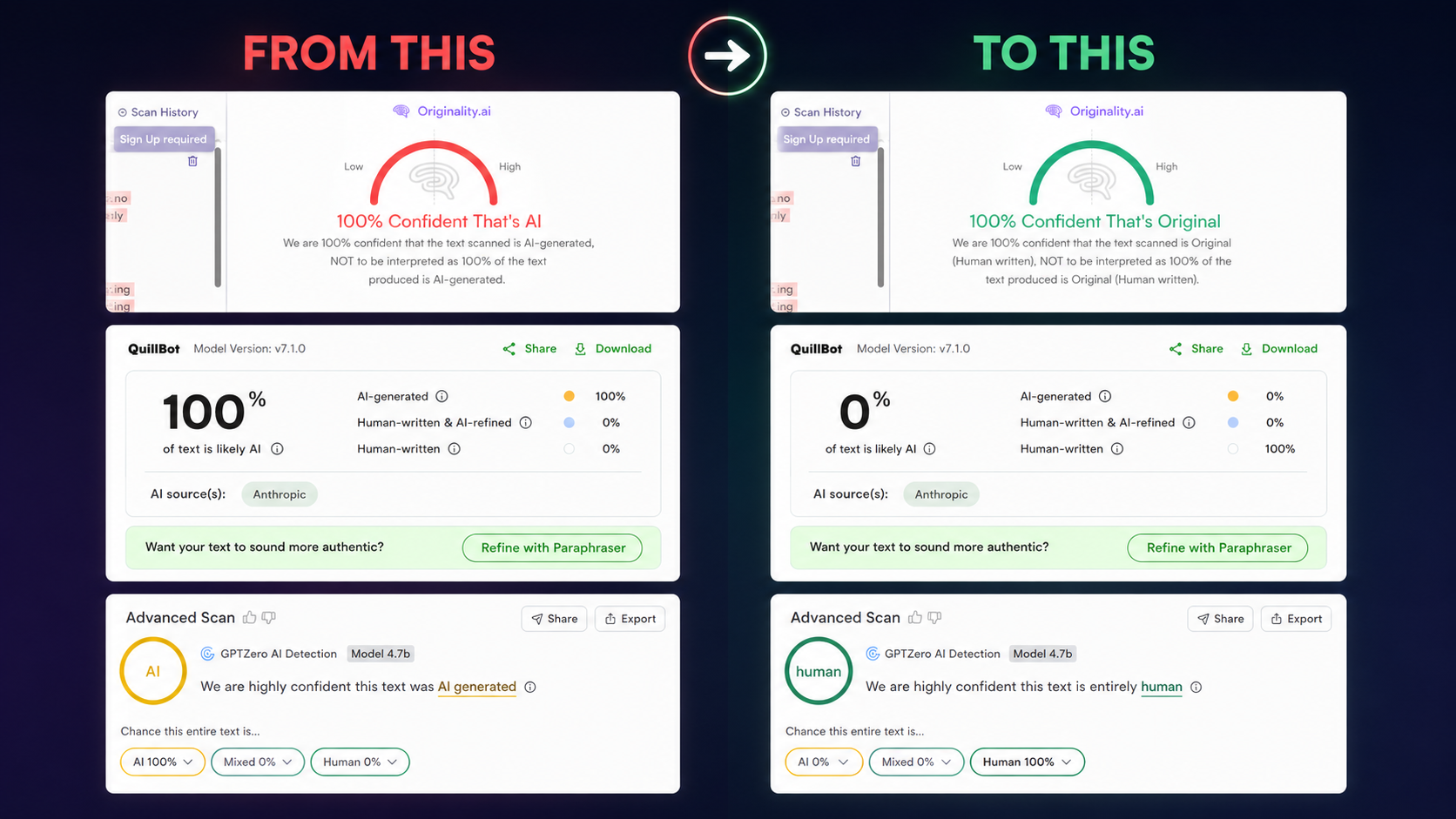
Are There Any Reliable AI Humanizers?
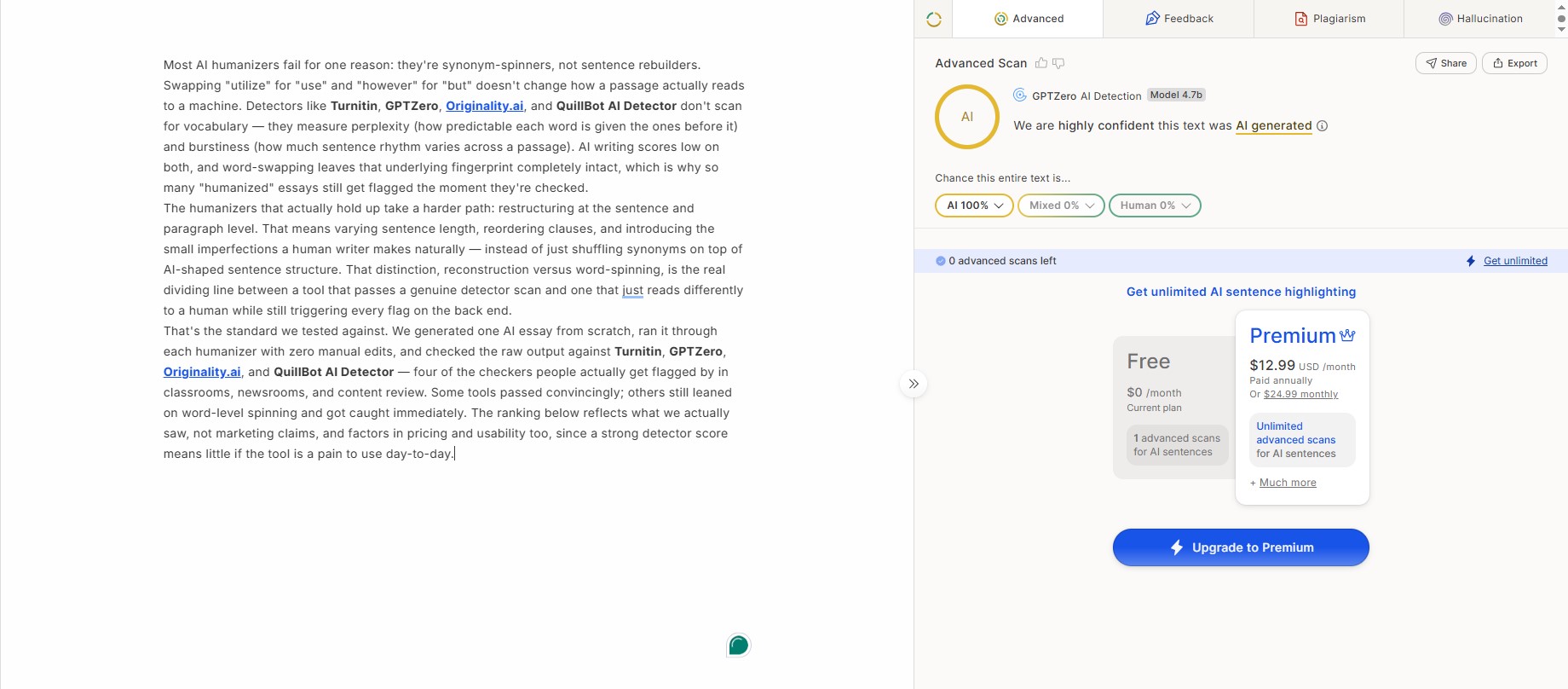
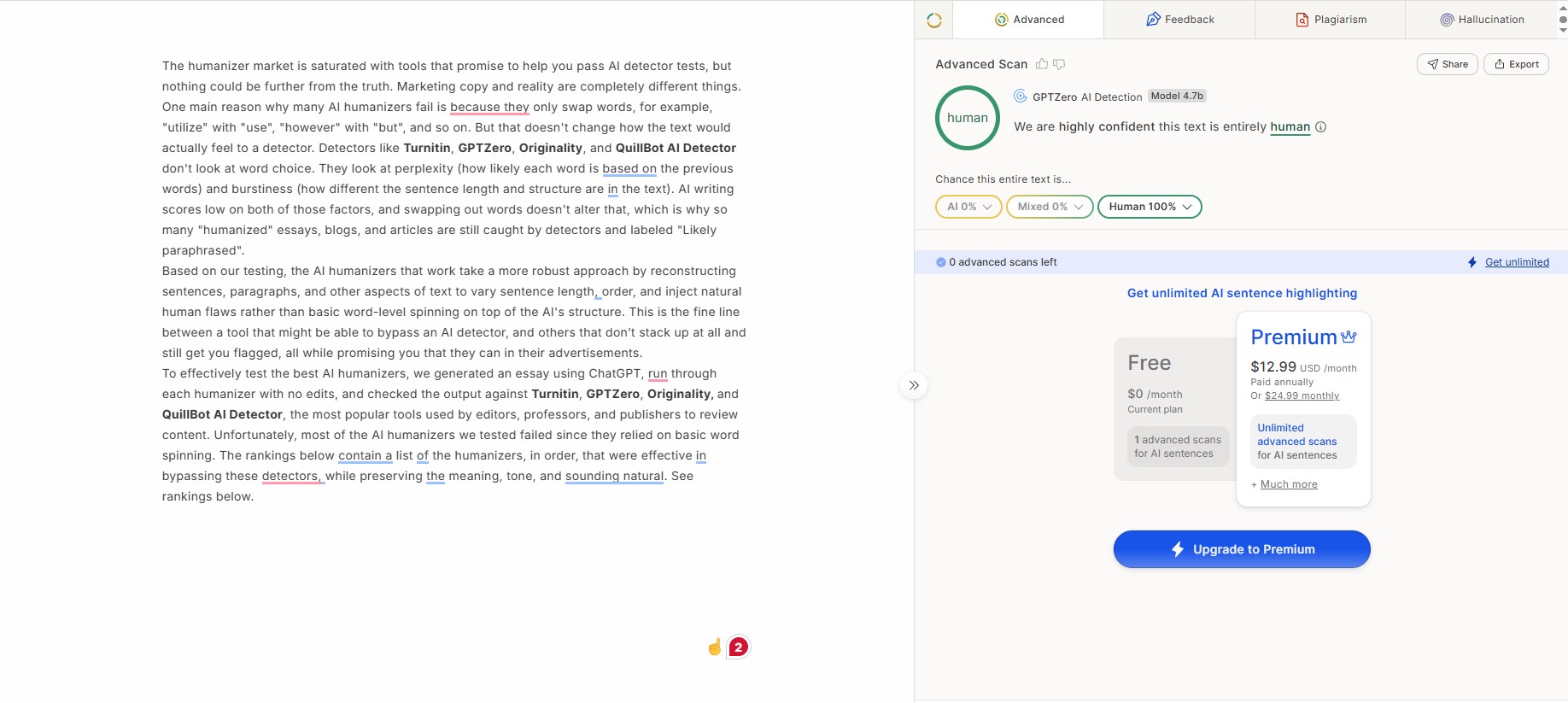
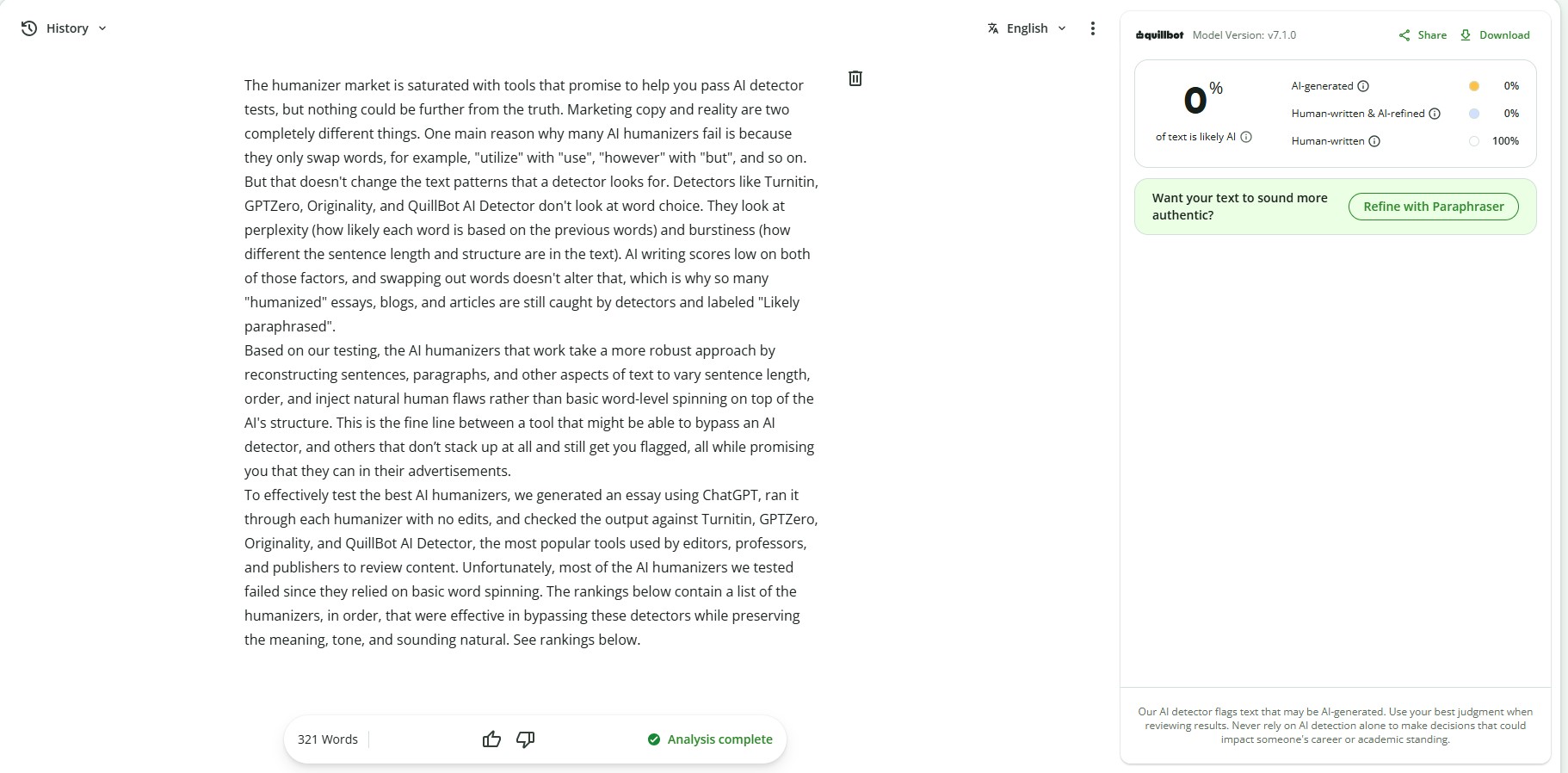
The humanizer market is saturated with tools that promise to help you pass AI detector tests, but most are empty promises. Marketing copy and reality are two completely different things. One main reason why most AI humanizers fail is because they only swap words, for example, "utilize" with "use", "however" with "but", and so on. But that doesn't change the text patterns that a detector looks for. AI Detectors like Turnitin, GPTZero, Originality, and QuillBot AI Detector don't look at word choice. They look at perplexity (how likely each word is based on the previous words) and burstiness (how different the sentence length and structure are in the text). AI writing scores low on both of those metrics, and swapping out words doesn't alter that, which is why so many "humanized" essays, blogs, and articles are still caught by detectors and labeled "Likely paraphrased".
Based on our testing, the AI humanizers that work take a more robust approach by reconstructing sentences, paragraphs, and other aspects of text to vary sentence length, rhythm, and inject natural human flaws rather than basic word-level spinning on top of the AI's structure. This is the fine line between a tool that might be able to bypass an AI detector, and others that don’t stack up at all and still get you flagged, all while promising you that they can in their advertisements.
To effectively test the best AI humanizers, we generated an essay using ChatGPT, ran it through each humanizer with no edits, and checked the output against Turnitin, GPTZero, Originality, and QuillBot AI Detector, the most popular tools used by editors, professors, and publishers to review content. Unfortunately, most of the AI humanizers we tested failed since they relied on basic word spinning. The rankings below contain a list of the humanizers, in order, that were effective in bypassing these detectors while preserving the meaning, tone, and sounding natural. See the rankings below.
Top 4 AI Humanizers
Updated 2026StealthGPT
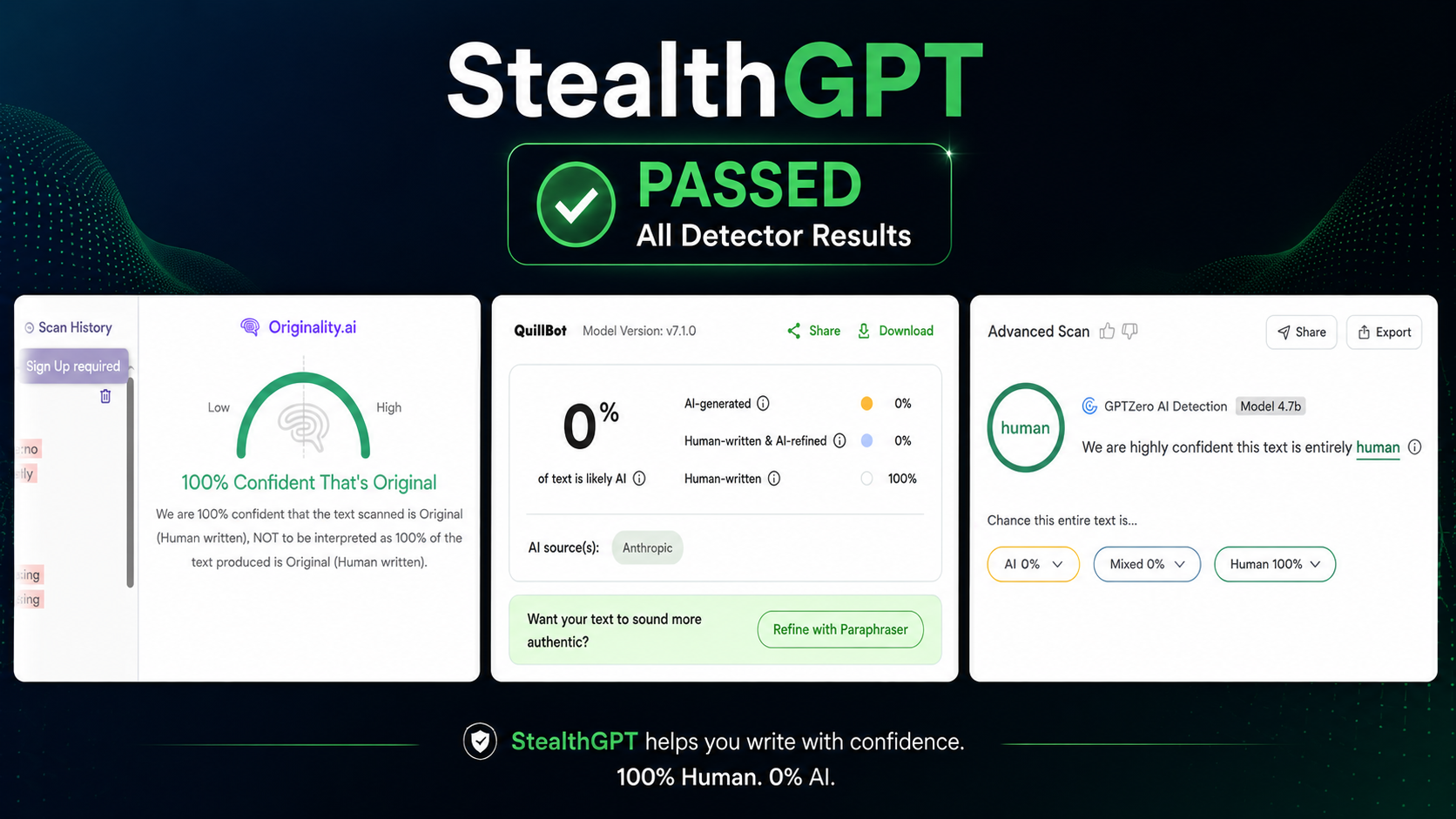
StealthGPT is built specifically to defeat detectors like Turnitin, GPTZero, and Originality.ai. Rather than just paraphrase text, it leans on a dedicated stealth rewriting engine instead of a generic reword pass, and pushes frequent model updates to try to keep up as detectors retrain. It's not just hype. It actually beat all detectors.
- Reconstructs text while preserving original meaning and tone.
- Built specifically to evade detection, not just paraphrase text.
- Handles long-form blog posts and academic writing well.
- The only humanizer with a weekly subscription for quick deadlines.
- A host of other tools like Stealth Writer, StealthAgent, SEO writer in one subscription.
UndetectedGPT
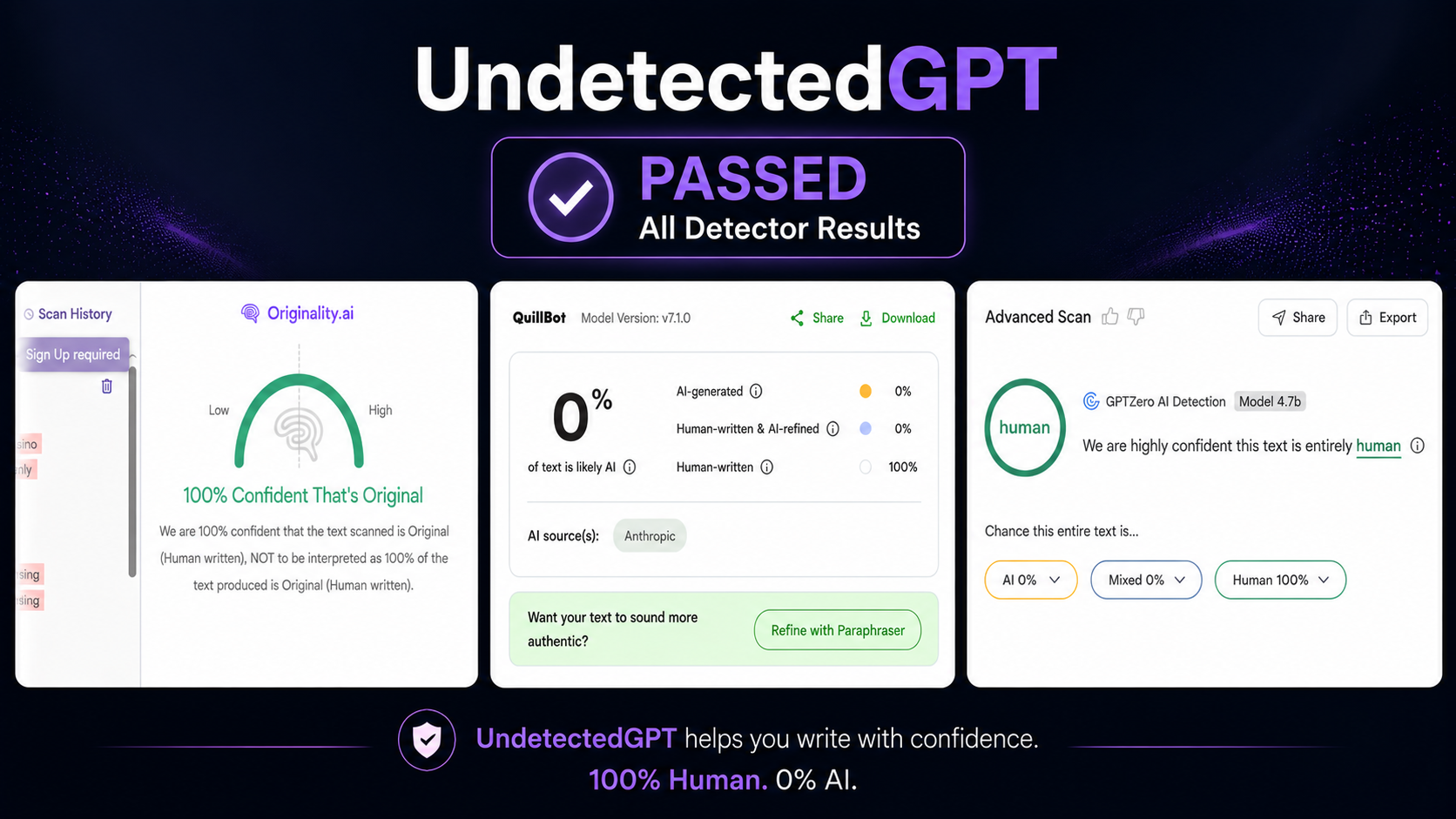
UndetectedGPT pairs its humanizer with a built-in AI detector so you can check a bypass score before you leave the page. It ships a free tier for light usage, credit-based daily limits on paid plans, and add-ons like an essay writer and tone customization for people who want more than a single rewrite button.
- Simple one-click interface, minimal setup
- Good for short-form content and social posts
- Built-in AI detector to self-check output before publishing
- Free plan available to test before paying
- Word limit was low at 500 words for premium plans
WriteHuman
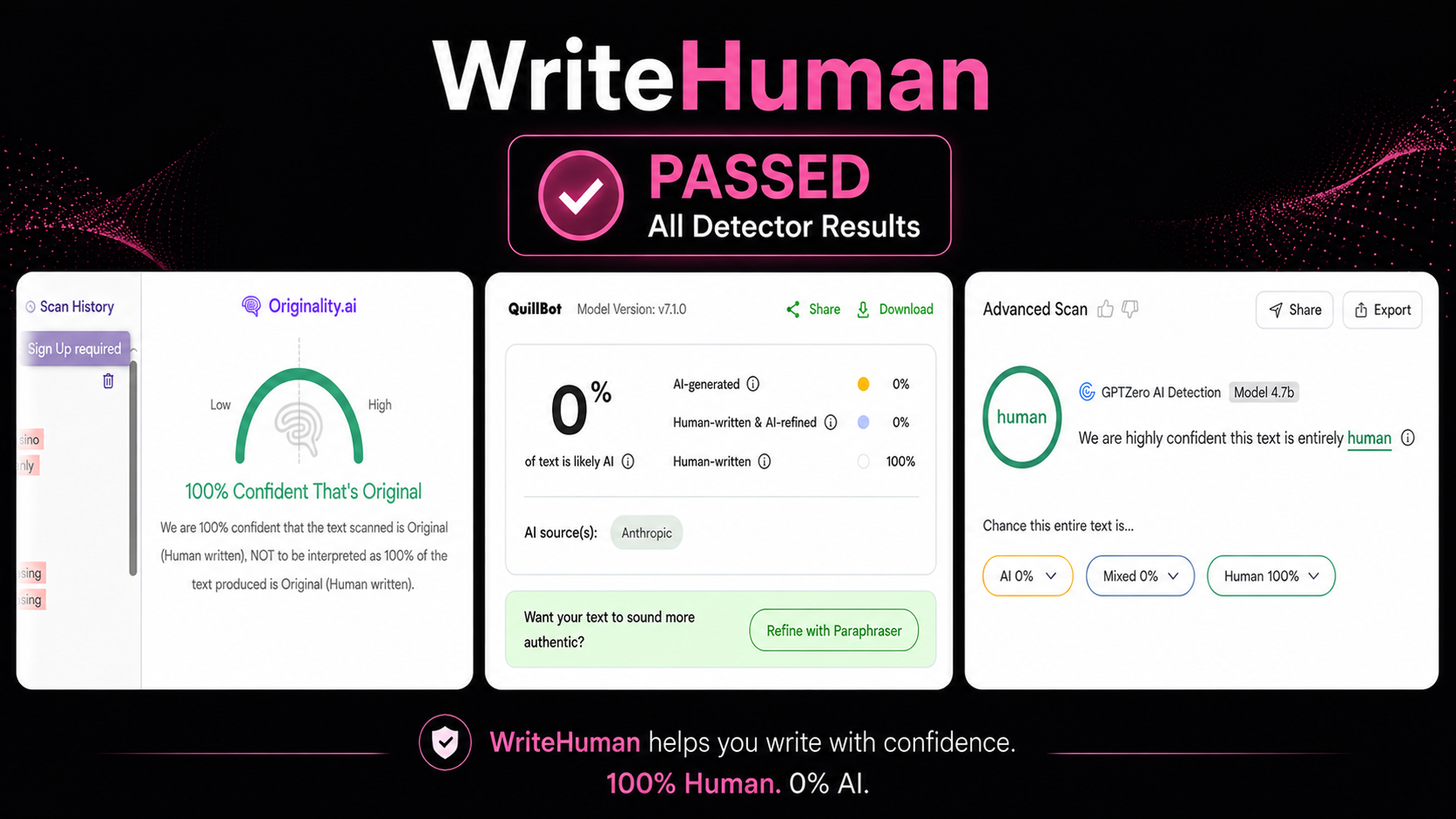
WriteHuman offers three humanization modes. Simple, Standard, and a deeper Enhanced rewrite on paid plans, plus Shorten, Expand, and Simplify tools and a Chrome extension for in-browser edits. Word allowances per plan run generous compared to others.
- Free plan available for light, occasional use
- Simple, Standard, and Enhanced rewrite modes
- Chrome extension for humanizing text in-browser
- Generous word allowances (250 words) for free trial
StealthGPT — Best Overall
Not every job needs a monthly subscription. StealthGPT's weekly plan is built for exactly the moment finals week hits, or a single article is due Friday and you don't want to pay for four weeks of access you'll never use again. Sign up, get through your deadline, and cancel. No mandatory monthly subscription.
- Full access to whole suite of stealth rewriting engine
- Billed weekly (best part) perfect for a single paper or rush deadline
- No long-term commitment if you only need it once
- Cancel anytime after your deadline passes.
Detector Results
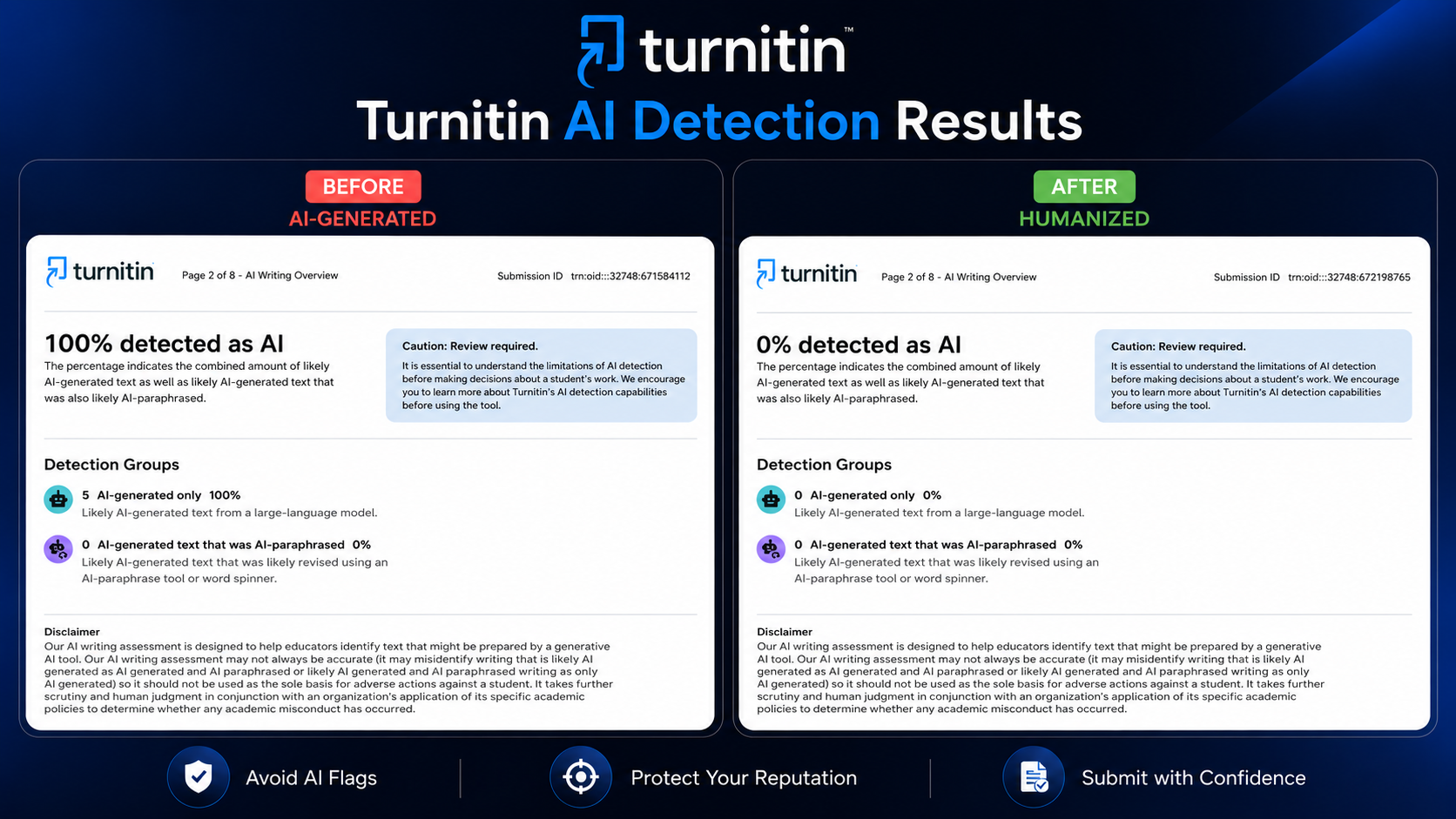
To test these tools head-to-head, we generated a single random essay using ChatGPT, then ran that exact same essay through each humanizer with no manual edits afterward. Each screenshot below shows the raw detector output for one of those runs — scroll through to see how Turnitin, GPTZero, Originality.ai, and Quillbot AI Detector actually scored each result.